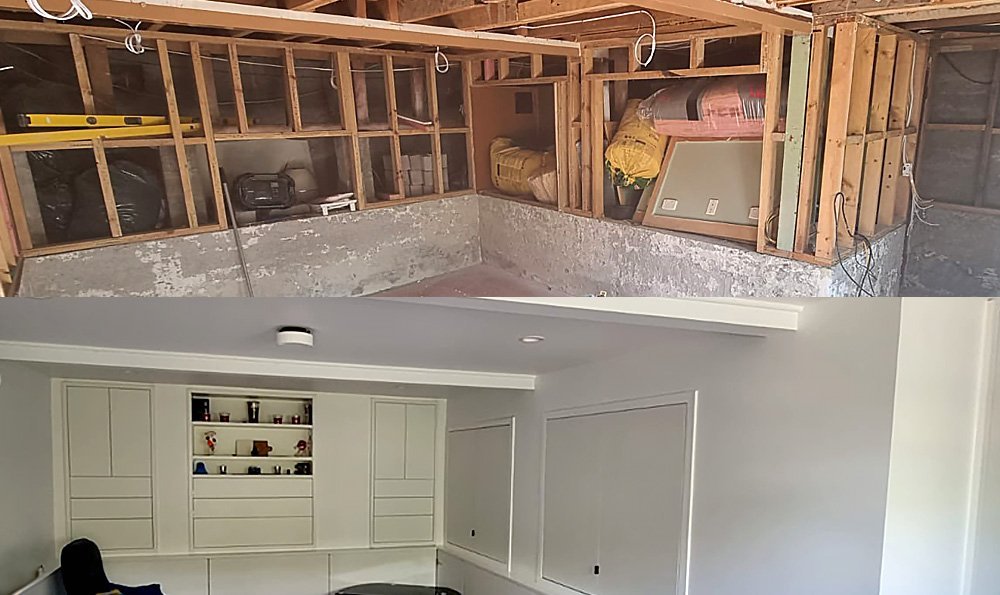
The answer, quite often, is yes. Rising building costs, supply constraints, and the desire for a more sustainable approach have nudged people to look differently at the spaces under their roof. An unused corner, a garage that’s half storage and half dumping ground, or a laundry that’s seen better days can all be turned into something genuinely useful. And when it’s done properly, repurposing can be just as rewarding as building from scratch — sometimes more so.
Why Repurpose?
There are plenty of good reasons why homeowners are leaning towards clever alterations rather than major builds.
It’s often easier on the wallet and the calendar.
New Builds can take months to plan and build. They usually require heavy consent processes and a fair amount of disruption to daily life. Repurposing existing space, on the other hand, can often be tackled faster and for less money. You’re not starting with bare earth, you’re making improvements to what’s already there.
It’s a sustainable choice.
Re-using and upgrading what you have keeps more of the original materials in play. That means less waste going to landfill and fewer new materials being hauled onto site. In an industry where sustainability is becoming more important every year, that’s not a small consideration.
You can transform underused spaces into something valuable.
The best part? There’s a certain satisfaction in transforming a tired or underused space into something valuable. It’s a bit like finding money down the back of the couch — except instead of coins, you’ve uncovered liveable square metres.
Common Examples in New Zealand Homes
You don’t need to look far to find opportunities. Every home has spots that could be doing more.
Garages with a second life.
For many households, the car hasn’t actually seen the inside of the garage for years. Instead, it’s a jumble of bikes, boxes, and garden gear. Converting part or all of it into a home office, a hobby room, or even a self-contained flat is one of the most popular moves we see. It takes advantage of an existing shell, often with easy access to power and entry points.
Basements with potential.
In New Zealand, these are often under-utilised simply because they don’t feel like “real” rooms. But with the right work — insulation, ventilation, lighting, flooring, and safe access — they can become bars, playrooms, or much-needed storage.
Dining rooms and laundries.
A lot of older homes were built for a way of living that doesn’t match how families use space now. Separate dining rooms might sit empty most of the week. Laundries are often poky, dark corners with little thought given to practicality. Reworking these areas into open-plan living spaces, or combined laundry–mudrooms that double as entry points, can make the whole house flow better.
What’s striking is that these aren’t radical transformations. They’re smart tweaks that reflect how people actually live today, not how houses were designed 30 or 40 years ago.
Things to Check Before You Start
Of course, it’s not all plain sailing. Repurposing still needs to be planned properly. Before you start imagining paint colours and furniture layouts, it pays to consider the basics.
- Building consent: Even if you’re not changing the footprint, most alterations will need sign-off from your local council. This is because most walls in New Zealand homes are structural and/or bracing elements. Any work involving cutting into or moving walls will typically require plans and consent. It’s also worth noting that failure to comply with consent requirements can affect your insurance coverage.
- Structural integrity: Just because a space looks available doesn’t mean it’s ready for use. Floors may need reinforcing, walls may need bracing, or weatherproofing might be an issue.
- Professional design: Plans need to be drawn up by a Licensed Building Practitioner (LBP) Designer, not just any builder or contractor. This ensures the work meets building standards and helps protect your investment.
- Services and comfort: Access to power, plumbing, and natural light can make or break a project. A basement bedroom without ventilation isn’t a healthy living space. A garage flat without proper insulation won’t win over tenants.
- Resale value: While you should renovate for your own lifestyle, it’s smart to think about how changes affect future buyers. A home office is a great asset right now, but will it add value later? In many cases, the answer is yes, but it’s worth asking the question.
These aren’t barriers so much as checkpoints. They help you decide whether a project is practical and how much work is involved.
Tips for Getting the Most out Of the Space
This is where thoughtful design really pays off. It’s easy to be swayed by glossy magazine spreads or Pinterest boards, but the most successful projects come from focusing on how the household actually lives.
- Design for real life. There’s no point turning a garage into a studio if what you really need is a teenager’s retreat. Start with how the space will be used day-to-day, not just how it will look.
- Work with what’s already there. Natural light, structural walls, and service access all guide the smartest layout. Fighting the existing structure usually means higher costs and more compromises.
- Think about the future. Can the space be reversed or adapted again later? A garage converted into a rumpus room might one day be returned to a garage. Making choices that allow flexibility can pay off down the track.
A good designer will help balance these factors, ensuring the final result isn’t just attractive but genuinely practical.